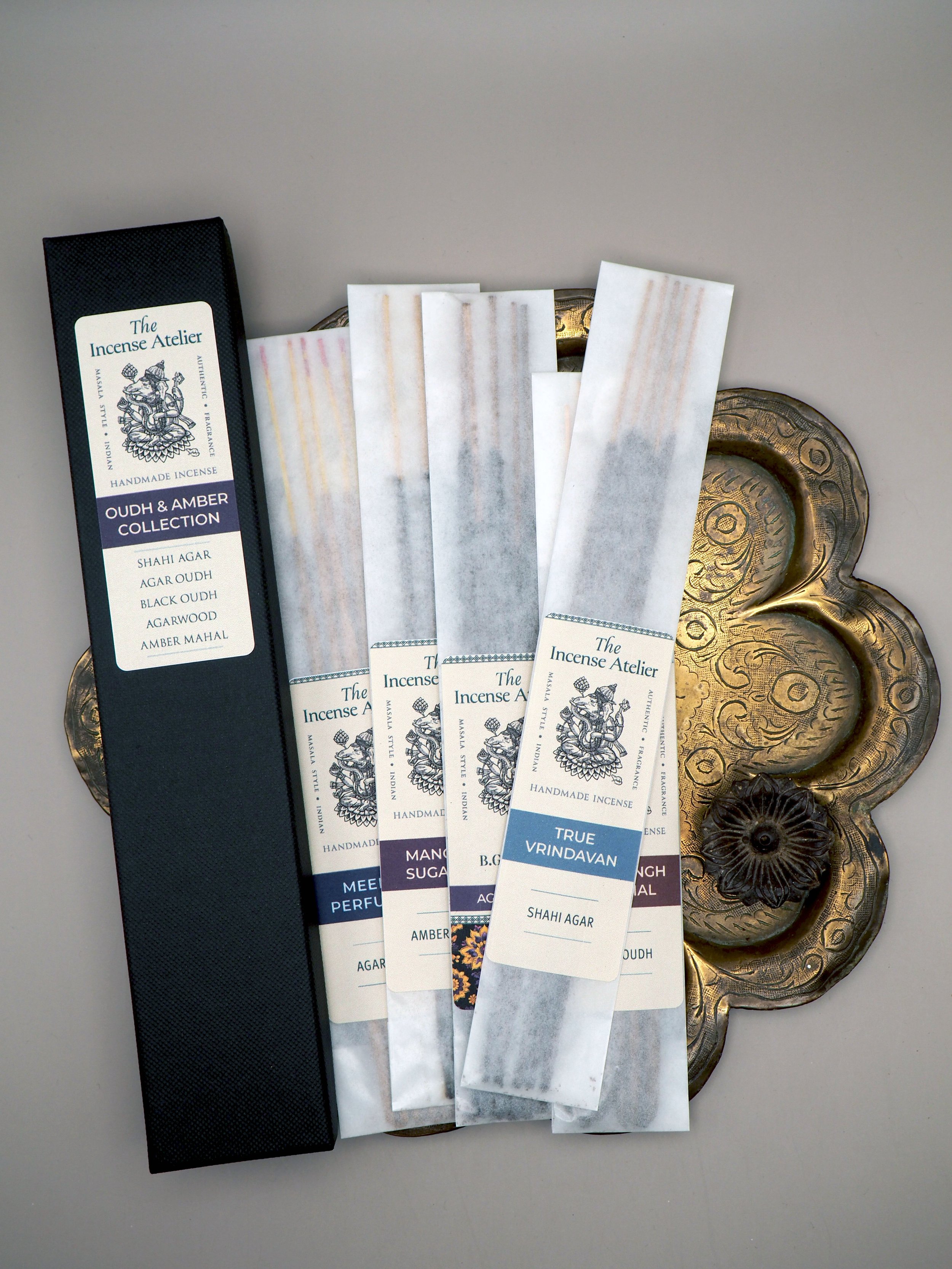
Oudh & Amber
Agarwood is one of those materials that means different things depending on where you encounter it. In Arabia and across the Islamic world, the resinous heartwood is soaked in aromatic oils and burned as bakhoor — a tradition of scenting spaces that is as much about hospitality as devotion. In India, that tradition meets the subcontinent's own incense-making culture, and the results are distinct.
The naming matters here. An oudh stick tends to be rich and dark, heavy with oil, often sweetened with rose or floral notes — the influence of attar tradition running through it. An agarwood stick is usually quieter: woodier, drier, more neutral in character. Some houses make both; the same raw material, read two different ways.
This set brings together five interpretations from across that range — from the honeyed depth of a true oudh style to the more restrained, wood-forward end of the spectrum. Taken together they give a reasonable map of the territory.
This discovery set comprises:
Shahi Agar – True Vrindavan
Agar Oudh– Meena’s Perfumery
Black Oudh – Gulabsingh Johrimal
Agarwood – BG Pooja Store
Amber Mahal – Manohar Sugandhi
25 sticks, 5 sticks of each variety, a total of no less than 50g of incense.
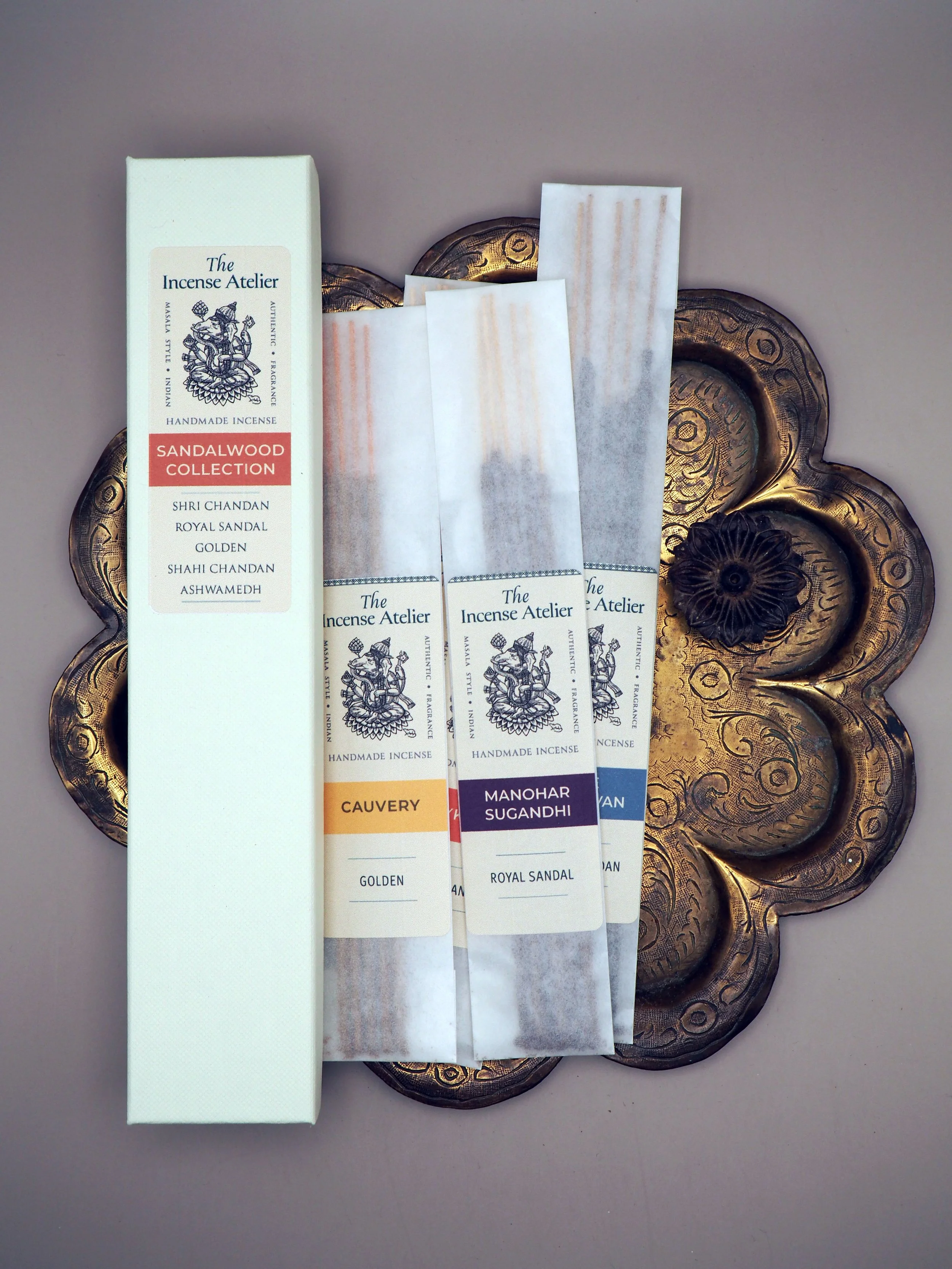
Sandalwood Discovery Set
Sandalwood is where Indian incense begins. It's both its fragrance and structure — the wood that gives a stick its body as much as its scent — and it's been at the centre of Hindu, Buddhist and Jain devotional practice for long enough that its presence in a temple or a home shrine feels less like a choice than a given.
Every serious incense house in India has its own interpretation of it. This set brings together five. Some lean toward creamy and soft; others are drier, more openly woody. The differences can be small but noticeable and it’s what makes the comparison enjoyable.
We put these careful selections together around a thread: a material, a place, a time: sandalwood is a good place to start.
This set comprises:
Shri Chandan - Baykeri’s
Royal Sandal - Manohar Sugandhi
Golden Sandalwood - Cauvery
Shahi Chandan - True Vrindavan
Ashwamedh - Manohar Sugandhi
25 sticks, 5 sticks of each variety, a total of no less than 50g of incense.
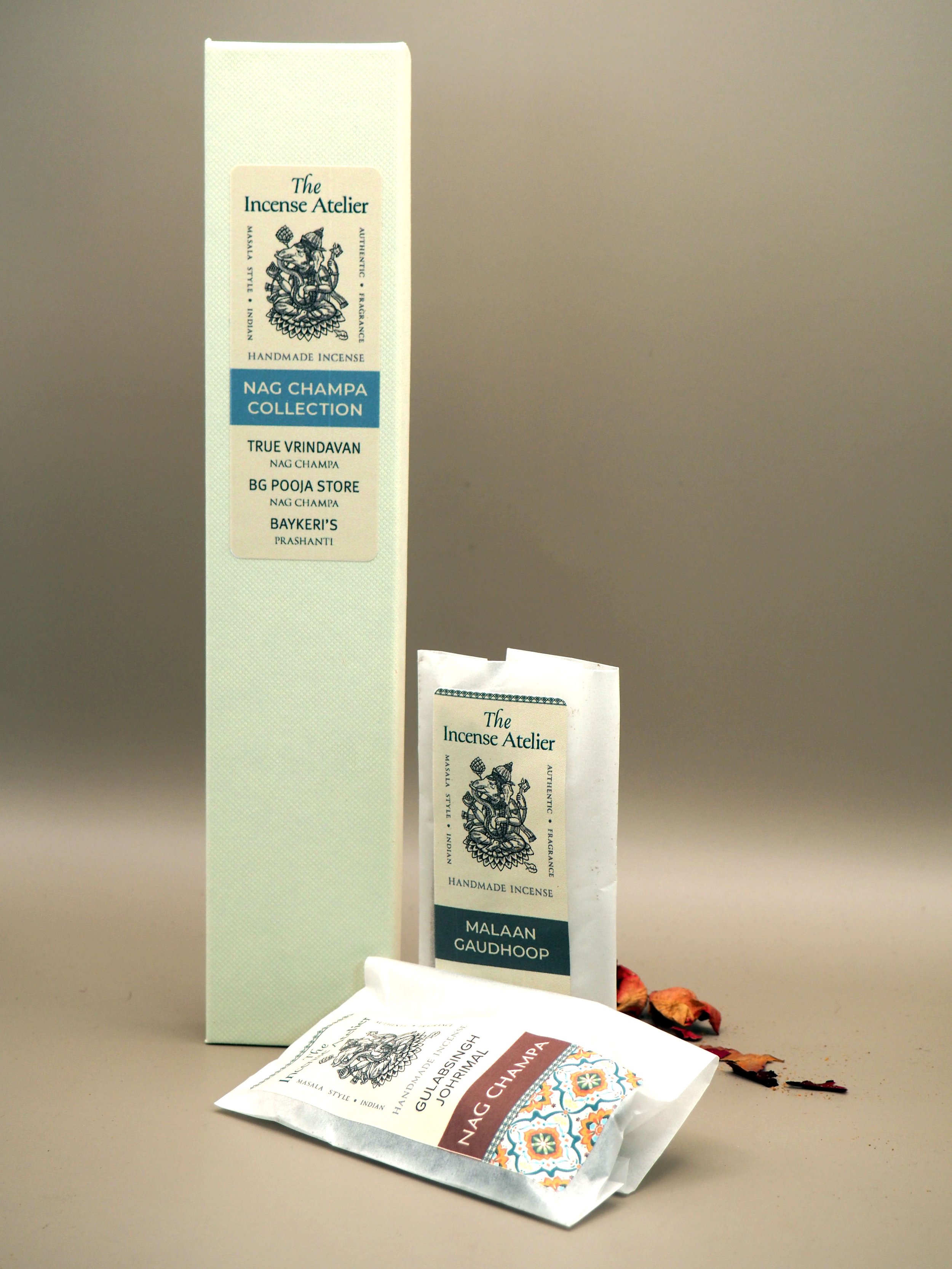
Nag Champa — Five Interpretations
Nag Champa is perhaps the most recognisable Indian incense style in the world — a distinctive blend of champa flower, sandalwood, and resin with a soft, powdery character that has made it a fixture in everything from ashrams to Western living rooms. If you'd like to know more about its origins and history, we've written about it at some length in our journal.
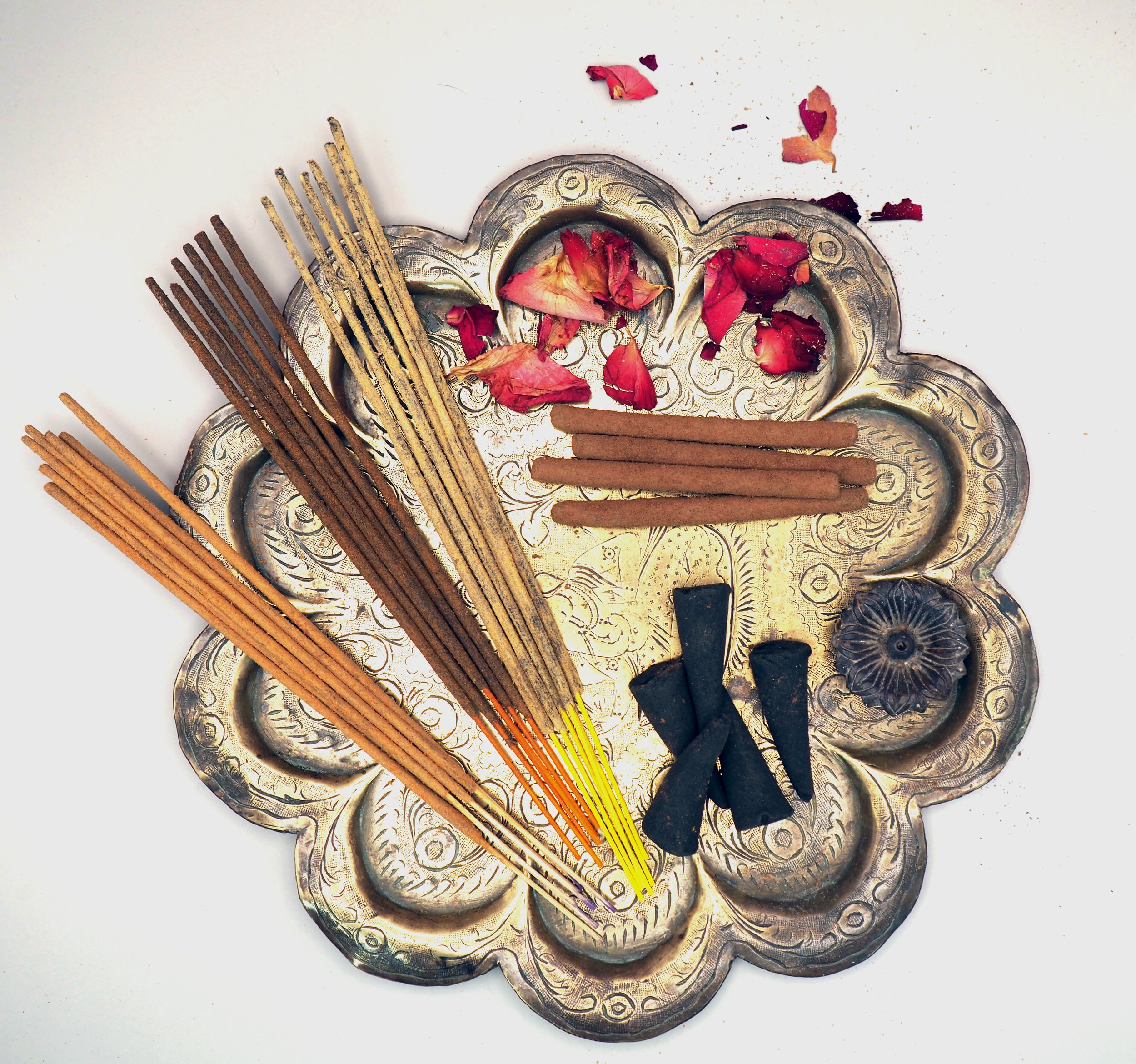
What is less well known is how much the style can vary between makers. This selection brings together five interpretations — three traditional agarbatti, one dhoop, and one cone — chosen after careful comparison for the different perspectives they offer on the same essential idea.
We think these five are among the finest examples of the style we have found. We hope you enjoy exploring them.
Included in this set:
· True Vrindavan – Nag Champa
A classic, full Nag Champa profile — softly powdery, slightly floral, with a rounded, balanced character.
· BG Pooja – Nag Champa
Built on a similar profile, but drier and more sandalwood-led, with a firmer, more grounded feel.
· Baykeri’s – Prashanti
A different take on the style, where Baykeri’s distinctive house character comes more to the fore.
· Meena’s Perfumery – Meena’s Supreme
The signature incense from this Bangalore perfumery.
· Malaan Gaudhoop – Swarna Champa Dhoop
A brighter, more expressive take on Champa, with lively floral notes set against an earthy, resinous base.
*The set includes a total of no less than 50g of incense, comprising sticks, cones, and dhoop.
No results match your search. Try removing a few filters.
